

How to Create a Capsule Wardrobe on a Tight Budget: The 2026 Guide
Let’s be honest: looking at "minimalist" influencers often makes your wallet cry. They preach about "buying less" while showing off a $400 white T-shirt made from the tears of organic unicorns. If you want to know how to create a capsule wardrobe on a tight budget, you need real logic, not luxury labels. In 2026, with inflation still a factor and fast fashion under the microscope, building a lean, high-utility closet is the ultimate financial and stylistic flex.
A capsule wardrobe is simply a curated collection of essential items that don't go out of style. These pieces should augment each other, allowing you to create dozens of outfits from just a handful of garments. You aren't "limiting" yourself; you are freeing yourself from the "nothing to wear" morning meltdown. Let’s dive into the mechanics of building this without draining your savings.
Navigation Menu
The Logic of the Capsule Wardrobe
Why do we buy clothes we never wear? Usually, it’s because we buy "outfits" instead of "pieces." We find a cool jacket, but it only works with one specific pair of pants. Logic dictates that if every item you own works with at least three other items, your outfit possibilities grow exponentially while your spending drops.
In 2026, the trend has shifted toward "quiet utility." People in the USA are increasingly opting for versatile, neutral tones that transition from a Zoom call to a grocery run. By focusing on a cohesive color palette—think navies, grays, creams, and one accent color—you eliminate the friction of getting dressed.
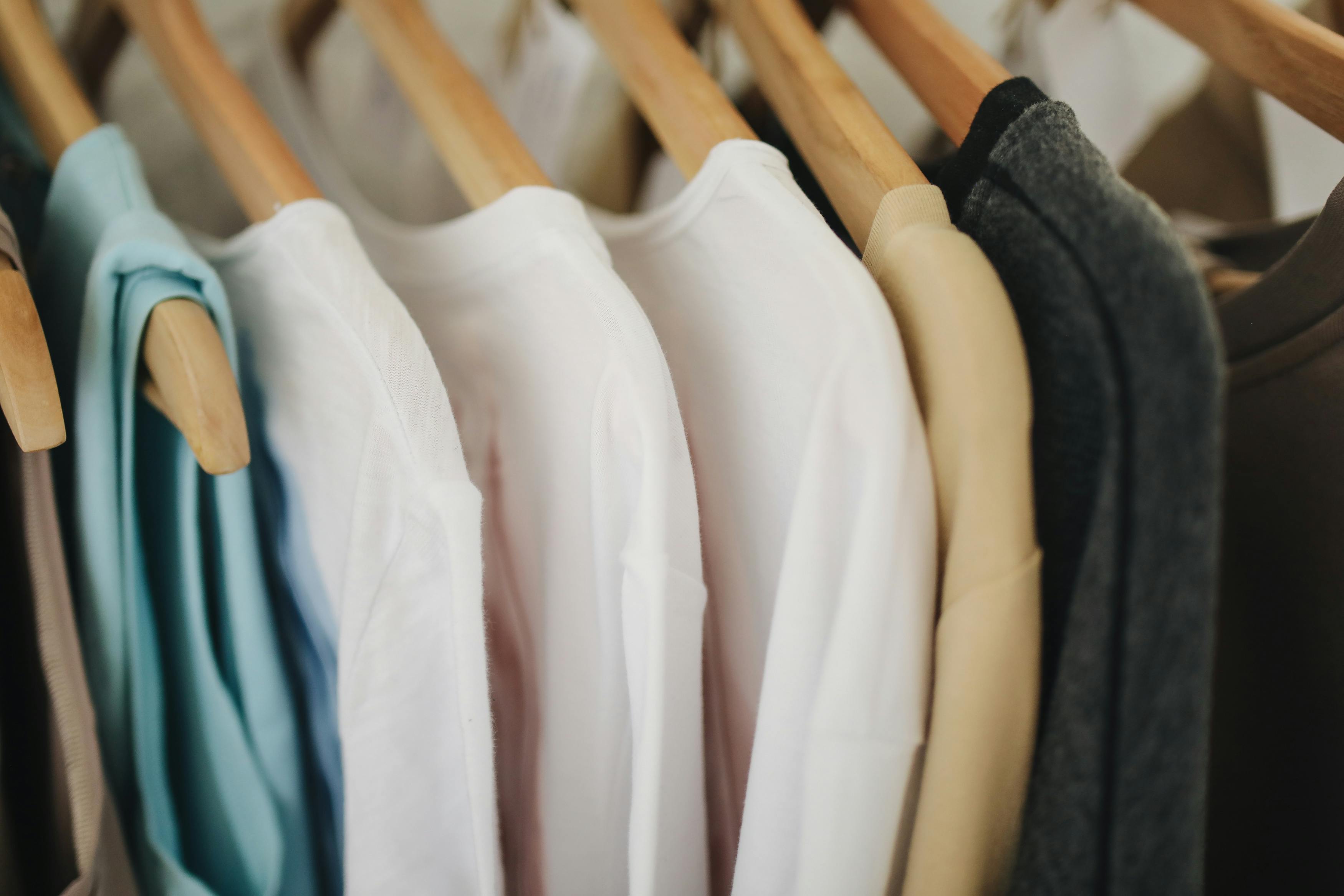
A well-organized capsule wardrobe focuses on quality and cohesion over quantity.
The "Zero Dollar" Closet Audit
The biggest mistake is thinking you need to buy a capsule wardrobe. You already own one; it’s just buried under that neon tracksuit you bought on clearance three years ago. Step one is a ruthless audit. Pull everything out. If you haven't worn it in six months, ask yourself why. If it doesn't fit or makes you feel like a potato, it’s gone.
By the end of this audit, you’ll likely find 10-15 pieces that you actually love. These are your "Foundational Items." Before you spend a single cent, identify the gaps. Do you have five shirts but no versatile pants? That’s your shopping list. This prevented "random shopping" is how you save hundreds of dollars annually.
The 2026 Budget Blueprint (The 5-4-3-2-1 Rule)
To keep your budget intact, follow the 5-4-3-2-1 rule. This is a classic minimalist framework adjusted for today's lifestyle needs. It ensures you have enough variety without the clutter.
| Category | Count | Budget Examples (USA Trends) |
|---|---|---|
| Tops | 5 | Basic tees, one button-down, one knit sweater. |
| Bottoms | 4 | Dark denim, tailored trousers, casual joggers, skirts. |
| Shoes | 3 | White sneakers, boots, and one professional pair. |
| Dresses/Outerwear | 2 | A versatile trench or wool coat and one "all-event" dress. |
| Accessories | 1 | One high-quality belt or a signature watch. |
Sustainable Thrifting & Resale Hacks
Once you know what you need, don't head to the mall. In 2026, the secondary market is booming. Apps like Poshmark, Depop, and ThredUp allow you to find high-end brands at Target prices. The secret? Search for specific materials. Look for "100% Cotton," "Linen," or "Wool." Synthetic fabrics like polyester often look cheap and wear out quickly.
For more lifestyle and budget-saving hacks, you can explore tutorials on Guru4Guru, which often covers digital and financial efficiency. Thrifting requires patience, but finding a $150 pair of Levi's for $20 is a high that no retail store can provide.
Longevity: Making $10 Pieces Look Like $100
The "tight budget" secret isn't just buying cheap; it's making cheap look expensive. This comes down to two things: Fit and Care. A $15 thrifted blazer can look like a $500 designer piece if you spend $20 at a local tailor to have the sleeves adjusted. Fit is the invisible language of style.
Secondly, stop washing your clothes so much. Detergents and heat are the enemies of fabric longevity. Wash your foundational pieces in cold water and air dry them whenever possible. This prevents pilling and fading, keeping your "budget" wardrobe looking fresh for years instead of months.
Limitations & E-E-A-T Considerations
As an expert in lifestyle optimization, I must provide a balanced view. A capsule wardrobe isn't for everyone. If you work in a creative field that requires high aesthetic variety, or if you live in a climate with four extreme seasons, a 20-piece wardrobe might feel restrictive. You might need a "seasonal capsule" approach instead.
Furthermore, while buying secondhand is cost-effective, it takes time. If you are working three jobs, you might not have the hours to scour thrift stores. In that case, focusing on high-quality basics from retailers like Uniqlo or Quince—which offer "honest" pricing—is a better logical choice.

Organization is half the battle when managing a smaller, more effective wardrobe.
Frequently Asked Questions
Absolutely! A capsule doesn't have to be beige. The key is that your colors must complement each other. If you love jewel tones, make sure your greens, burgundies, and teals all work with your base neutral (like black or navy).
There is no "posture-police" for closets. Most experts suggest between 30 and 40 pieces, including shoes and outerwear. However, if you can do it with 20, go for it!
If you do it right, it costs $0 initially because you are using what you already own. You only spend money to replace worn-out items or fill critical gaps identified during your audit.
Final Verdict
Mastering how to create a capsule wardrobe on a tight budget is about shifting your mindset from "consumer" to "curator." In a world designed to make you feel like you're "behind" if you don't have the latest trend, having a closet full of clothes that actually fit and work together is the ultimate peace of mind. Start with your audit today, shop with a list, and watch your style—and your bank account—transform.



0 Comments